
Crete history through the places you can visit
Crete history is easier to follow when each period is attached to a place rather than compressed into a single story about Knossos. The palace, the Archaeological Museum in Heraklion, Chania’s monuments and Spinalonga provide different starting points. Begin with the part that interests you, then connect it with another site whose purpose and period differ. This gives the route a clearer shape than treating every monument as part of the same ancient world.
Crete is Greece’s largest island, and the regional overview distinguishes Chania, Rethymno, Heraklion and Lasithi. Use those regions to organise the journeys between historical visits. A programme around Knossos and Heraklion can concentrate on archaeology; a separate eastern outing can explore Spinalonga. Chania offers an old-town and harbour setting for another part of the island’s story.
A useful approach is to choose a historical question for each visit. At the palace, focus on the archaeological site and its interpretation. In the museum, look at the wider chronological span of the collection. On Spinalonga, distinguish the fortification from the later leprosy station and give that human history its own attention.
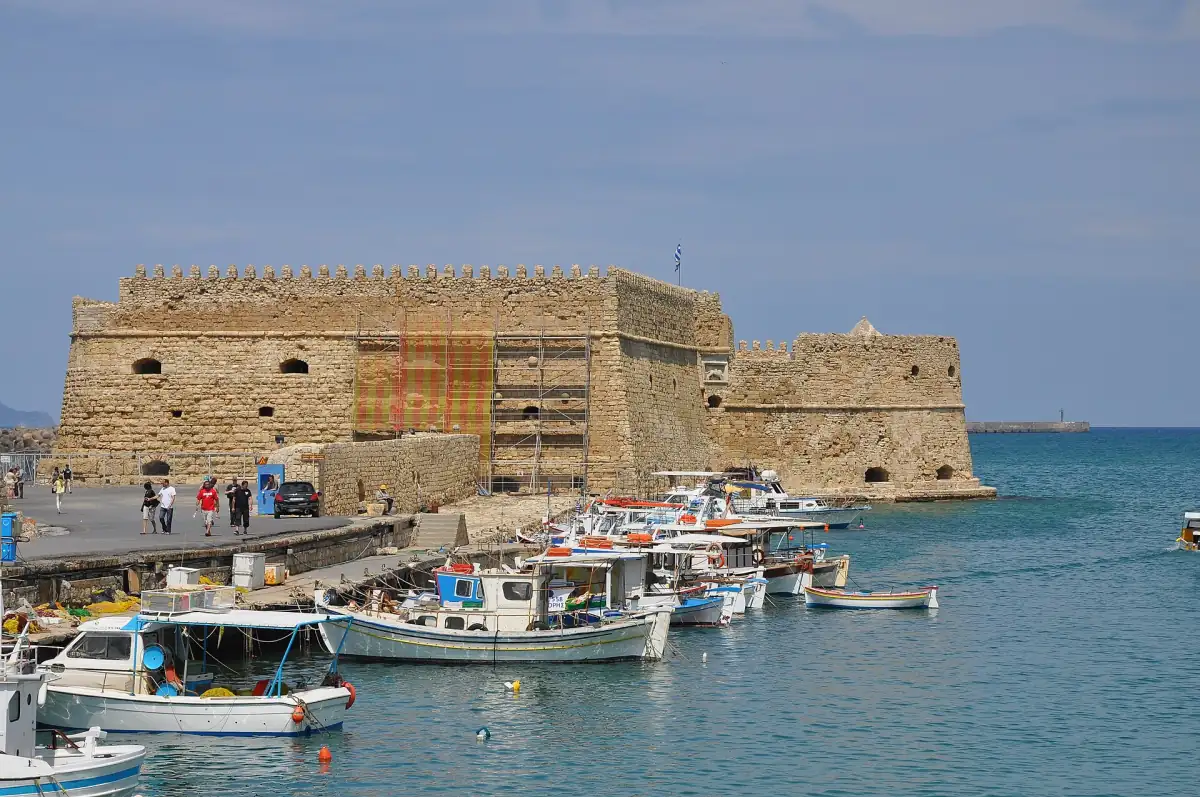
Ancient history and the Minoan palace centres
The Minoan Palatial Centres were inscribed as a serial UNESCO World Heritage property in 2025. The property contains six archaeological sites. UNESCO describes a period from 1900 to 1100 BC for the series; this should be understood as the framework of the property rather than the exact founding and ending dates of every settlement within it.
Keep that wider context in mind while visiting Knossos. The inscription relates the palace centres as a series, while an individual visit concentrates on one site. The distinction helps when arranging a route: a guided palace visit is a focused archaeological experience, and the larger historical setting continues beyond the limits of that particular outing.
Our picks: History
Explore Knossos with a licensed guide and palace entry included.
Hand-picked tours, booked through Viator. Prices are indicative starting prices in euros (as of November 2026). Tap a tour for live availability and the current price in your currency.
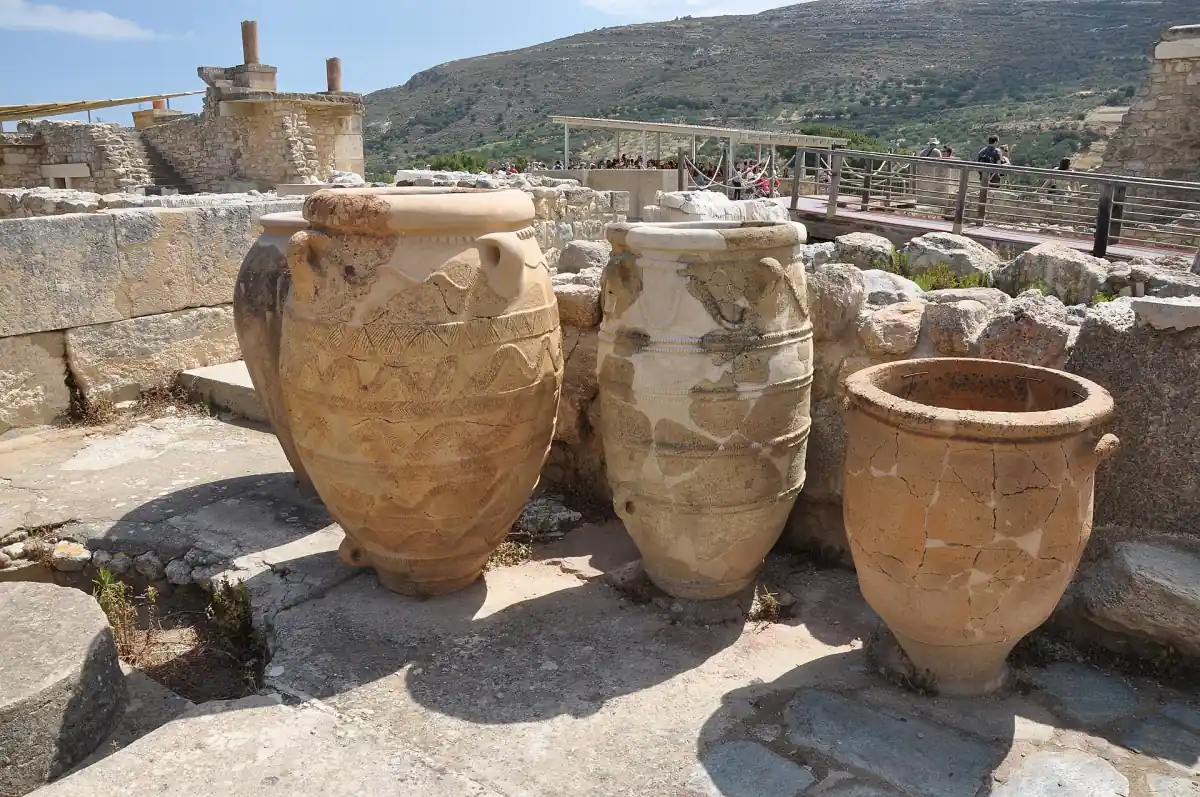
Explore Knossos with a licensed guide
A shared palace visit includes general admission and a licensed guide. The Archaeological Museum is an optional add-on.
Mythology: Minos, the Minotaur and the labyrinth
Minos, the Minotaur and the labyrinth belong to mythology. They provide a narrative associated with Knossos, but the story should be kept separate from the evidence examined through excavation. When preparing for the palace, it is useful to hold both interests together without treating the myth as a literal account of the building or its inhabitants.
This distinction also helps during a guided visit. A myth can introduce questions and images, while archaeology provides a different way to consider the site. For the practical details of visiting, continue to the palace page rather than treating a mythological theme as a separate attraction with its own admission.
Excavation and the Archaeological Museum
Kalokairinos excavated at Knossos in 1878. Evans carried out systematic excavations from 1900 to 1931. These dates belong to the modern study of the site and should be distinguished from the ancient periods explored there. Thinking about excavation alongside ancient history adds another layer to the visit: the palace is also a place whose interpretation developed through later investigation.
The Archaeological Museum in Heraklion has a collection spanning the Neolithic to the Roman period. It therefore provides a broader chronological setting for a palace-focused day. Plan the museum as a separate visit with its own opening arrangements. The Heraklion excursion guide helps place it within a regional programme.
The shared Knossos guided visit offered here includes a licensed guide and the palace general admission ticket. The Archaeological Museum is an optional add-on. Choose the scope of the experience accordingly: the guided palace component and the optional museum component are distinct parts of the offer.
Spinalonga and modern turning points
On Spinalonga, Venetian fortress construction took place from 1579 to 1586. The Ottomans took over in 1715, and a leprosy station was established in 1903. These are different stages in the island’s history. Give the later station a respectful reading centred on the people who lived there, alongside consideration of the earlier fortifications.
For a Spinalonga visit, organise the boat connection and monument access for the same date. The historical interest does not settle the practical arrangements. Likewise, a stay in Chania can include its old town, Venetian harbour, Byzantine fortification and the context of ancient Kydonia as distinct strands in a city walk.
Crete’s union with Greece took place on 1 December 1913. The German airborne operation at the opening of the Battle of Crete began on 20 May 1941. Keep these modern turning points separate from the ancient palace narrative when tracing the island’s past. They belong to a later historical framework that deserves its own place in a wider itinerary.
Frequently asked questions
What did UNESCO inscribe in 2025?
The Minoan Palatial Centres form a serial World Heritage property with six archaeological sites. The period describing the series is not the exact lifespan of each settlement.
Is the Minotaur story archaeological history?
Minos, the Minotaur and the labyrinth belong to mythology. Keep the narrative distinct from the material evidence considered during an archaeological visit.
Does the Knossos guided visit include the museum?
The palace visit includes a licensed guide and general admission to Knossos. The Archaeological Museum is an optional add-on rather than a general combined ticket.